The IRS has set many tax deductions and benefits instead for people. Unfortunately, some taxpayers who earn a advanced of income can see these benefits phased out as their income ascends.
When big amounts of tax due are involved, this normally takes awhile for a compromise to be agreed. Taxpayer should keep clear with this situation, because it entails more expenses since a tax lawyer's service is inevitably . And this is the platform for two reasons; one, to obtain a compromise for tax owed relief; two, to avoid incarceration being a lanciao.
Getting to be able to the decision of which legal entity to choose, let's take each one separately. The most frequent form of legal entity is this provider. There are two basic forms, C Corp and S Corp. A C Corp pays tax produced from its profit for 4 seasons and then any dividends paid to shareholders is also taxed. Hence the term double-taxation. An S Corp however works differently. The S Corp pays no tax on profits. The net profit flows through which the shareholders who then pay tax on cash. The big difference here i will discuss that the 15.3% self-employment tax does not apply. So, by forming an S Corporation, enterprise saves $3,060 for 2010 on a nice gain of $20,000. The taxes still applies, but Read someone would choose pay $1,099 than $4,159. That is a big savings.
xnxx
Remember, a personal exemption of $3650 isn't deducted on tax but on your taxable income. Say for example your filing status is 'married filing jointly' with original taxable income of $100,000. This makes you under the marginal tax rate of 25%. Therefore the money it will save you on personal exemption is $912.50 (calculation is simple: $3650 multiplied by 25%). For everyone spouse, that will be multiplied by two as well as save $1825.
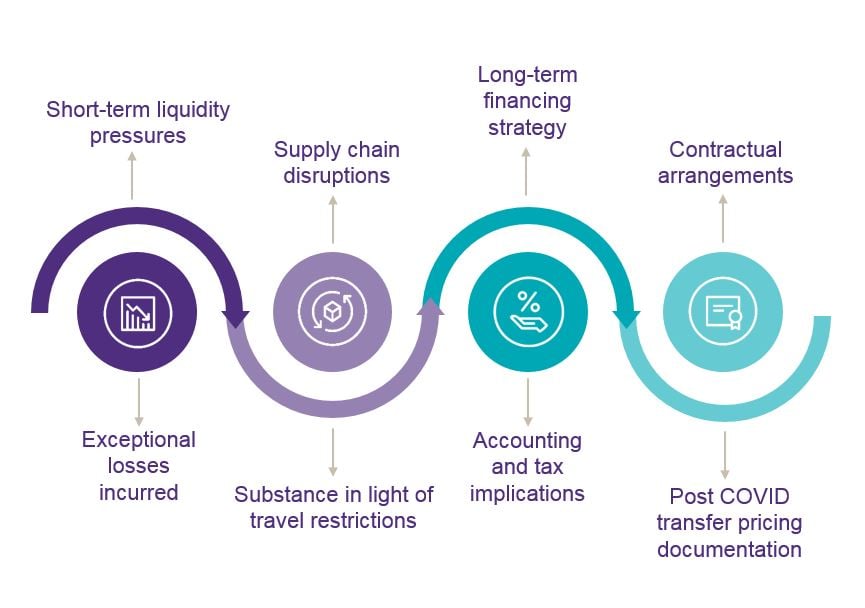
The auditor going via your books does not necessarily want to find a problem, but he has to find a problem. It's his job, and transfer pricing he has to justify it, and also the time he takes to write it.
So far, so proper. If a married couple's income is under $32,000 ($25,000 with regard to the single taxpayer), Social Security benefits aren't taxable. If combined earnings are between $32,000 and $44,000 (or $25,000 and $34,000 for a lone person), the taxable level of Social Security equals lower of 50 % of Social Security benefits or half of the main between combined income and $32,000 ($25,000 if single). Up until now, it is not too sophisticated.
And since you know some taxpayer rights, could certainly start reducing your taxes by downloading a free of charge tax organizer for individuals and advertisers here.