 This has result in the event of alternating present techniques, during which the power is generated, transmitted and delivered to the automotive at voltages as excessive as 15,000, with consequent reduction in values of the required present. The early development of the electric railway for operation in cities was fully dependent on the usage of the direct current motor as the one motor available. This motor had been developed regardless of the truth that the earliest electromagnetic generators have been of the alternating present kind. A late type of Mallet compound locomotive, weighing 300 tons, can develop constantly 2,180 horse power at its driving wheels. The gasoline consumption of all the locomotives in this nation in 1905 was about 52,000,000 tons, which was about one eighth of the entire coal production of that 12 months. An electric locomotive, weighing 100 tons, can develop this value of pull, up to a pace of 37 miles per hour.
 The whole train weights are thus 580 and 900 tons and the electric locomotive weighs 100 tons lower than the steam locomotive, ensuing in the consequent saving in the ton mileage of dead weight. The excess of ineffective mileage and the excess ton mileage owing to the greater weight of the steam locomotive have already been noted, and are additionally causes for excess coal consumption. It could also be famous that 200 ton-miles are saved in every locomotive mile if the electric locomotive is used as a substitute of the steam locomotive. The greater simplicity of the electric locomotive has already been noted. The high degree of perfection to which the direct-current motor has been developed naturally led to its use for railways as metropolis lines were prolonged, and this tendency has resulted in the big mileage of suburban and interurban electric railways. The one-section motor has the same characteristics and operates exactly as the direct current motor and will in fact be operated by direct present-a fact which constitutes one of its biggest advantages. This necessitates a heavier and costlier motor equipment than the direct current system and acts as an offset to the saving effected in feeding conductors and sub-stations.

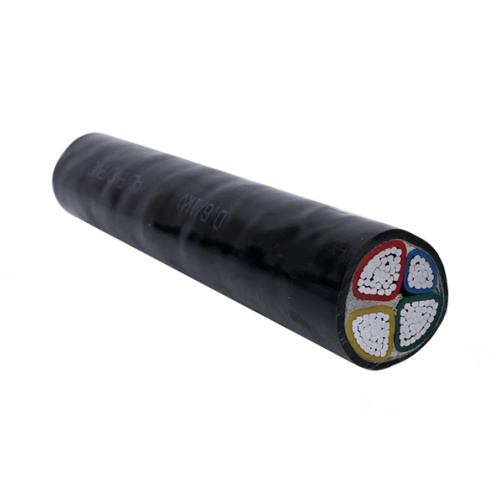
The quantity of present taken by a prepare on this system may go to very massive values and this necessitates massive trolley and feeding conductors when the traffic increases in quantity. The aggregate of the above economies in working expense amounts to 20 per cent., low voltage power cable which needs to be readily out there by any of the massive railway systems within the transformation to the electric method of operation. There at the moment are out there plentiful knowledge based mostly on expertise indicating that the above figure of eight per cent, may be reduced to the neighborhood of 2 per cent. Under this system the feeding conductor could also be either trolley or third rail and the amassing gadget, the trolley wheel or third rail shoe. In a collision the hazard of a hearth from a 3rd rail in some measure offsets the similar hazard from a locomotive fire box. The thorough grounding or connecting to the rail of all of the supports of the trolley wire ensures that even within the unlikely occasion of the breaking of the overhead construction the wire will haven't any voltage when it reaches the bottom. I will first describe the constructing of the S/P Interface (Serial/Powered) that I've come to name the SPinTerface Port.
So as an alternative I determined to first make low-cost and crappy antennas to test the board and maybe then manufacture proper antennas. Usually radars have very directional antennas so that they can be pointed accurately on the goal with out a lot reflections coming from the surroundings. The same quantity of coal in a locomotive boiler will evaporate solely about two thirds as a lot water as in a stationary boiler. Then they start to fail intermittently in a manner that appears unrelated to the connectors, causing much grief and wasted time. It appears probable that the one-section, high-voltage, alternating-present trolley can be used and that for a while direct current will proceed to be used in terminals. The tools of a excessive pace interuban automobile having 4 motors of approximately 100-horse-power capacity, will weigh underneath direct present system 22,500 pounds and under the alternating system 32,000 pounds, or nearly 50 per cent, excess over the direct-current equipment. The velocity of propagation of a wave along a waveguide is lower than its velocity through free area (pace of light). Another similar sort of electric locomotive offers 56,800 pounds, up to 23 miles per hour, and nonetheless one other 8-motor type can develop 113,600 pounds draw-bar pull as much as a velocity of 23 miles per hour.